

To be successful as a business in Dubai or Abu Dhabi, entrepreneurs must change how they operate: from a small, agile startup to a large, corporatized business. Until recently, this transition in the UAE has required significant financial investment. Entrepreneurs were either forced to pay a prohibitively expensive full-time C-suite executive while they couldn’t afford them or promote a young manager into the C-suite when they weren’t ready, resulting in both scenarios almost inevitably ending in disaster.
A new model is now emerging in the UAE business landscape: fractional executive leadership. “The region doesn’t have a talent shortage. It has a timing problem: SMEs need senior people years before they can hire one,” says Rhys Holding, Managing Director of Fractional in the UAE. Having started, scaled, and sold his own business in Singapore before moving to Dubai, Holding understands this pain point from both sides of the table.
When it comes to bringing on a full-time executive, the salary is only the tip of the iceberg. Salary data from Cooper Fitch states that a full-time Chief Financial Officer (CFO) for a UAE SME earns a base of between AED 61,000 to AED 92,000 per month. Including executive health insurance, relocation costs, visas, executive performance bonuses, and the statutory end-of-service gratuity that accumulates over tenure, the financial commitments are substantial.
Yet, as Holding points out, the largest risk is rarely purely financial:
“The salary is the smallest part of it. If the hire is wrong, you pay out the notice period and start the search again. The bigger cost is time. The cost of a wrong C-suite hire isn’t the salary; it’s the year you lose finding out. Culturally, a team that watches a senior leader arrive and leave inside a year becomes more cautious about the next one.”
For funded scale-ups, this lost year can be fatal to their bank balance. Not only do bad hires consume capital twice—once while they are in the seat and again while unwinding the hire, addressing executive turnover, and sourcing a replacement—they also erode operational momentum.
In contrast, fractional executives operate on a flexible business-to-business (B2B) basis. Fractional engagements typically run 30% to 60% below full-time costs, carry a 30-day notice period, require no residency visa sponsorship, and accrue zero end-of-service liabilities. Perhaps most importantly, they allow founders to test and prove the role before committing permanent equity or capital.
Every business has to navigate the “messy middle”—the period of friction that occurs when a company expands beyond 15 or 20 employees and the informal channels of communication start to break down. The first, and most obvious, place this becomes apparent is on the founder’s calendar.
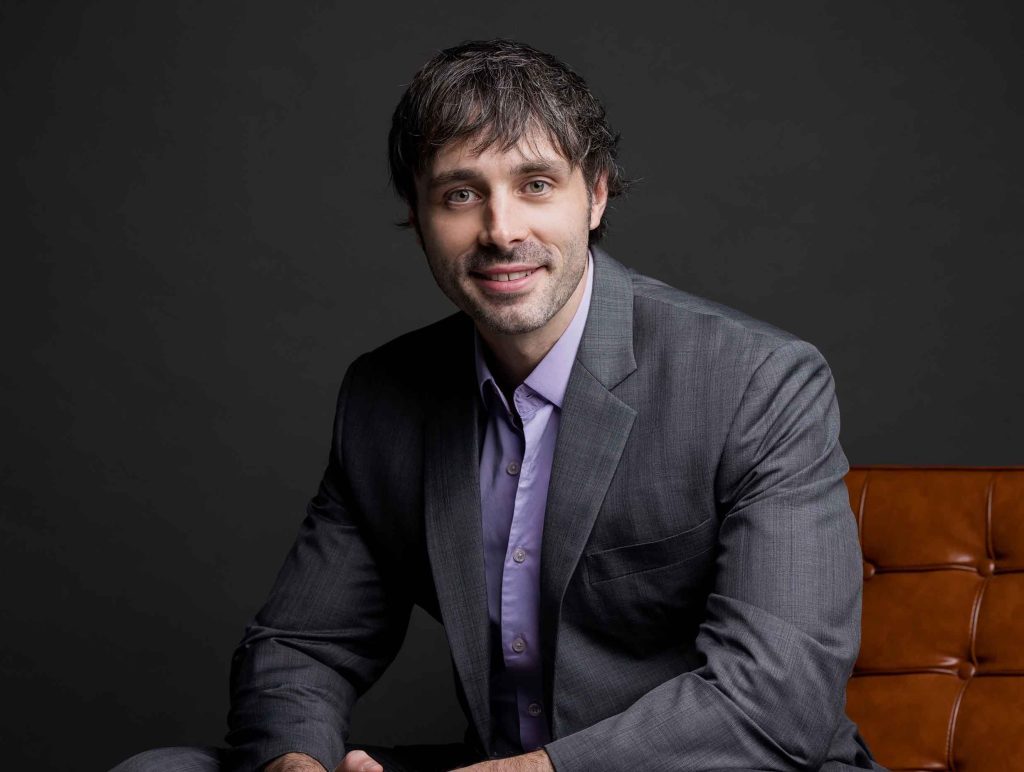
“When pricing, hiring, and which supplier gets paid first decisions all wait for one person, the founder has become the ceiling on growth,” observes Holding. “In practice, founders end up making executive-level decisions across every part of the business, without executive-level support around them. It shows up when preparing for a funding round without anyone senior owning the numbers, operations that worked at one size breaking at the next, and new obligations like corporate tax and e-invoicing landing on someone who was never hired to own them.”
Rhys Holding, Managing Director of Fractional in the UAE
While traditional management consultancies certainly have their place for enterprise-grade strategy, high-growth SMEs often require hands-on execution rather than high-level advisory decks. Fractional executives integrate directly into the business, establishing standard operating procedures (SOPs), clear guardrails on delegation, and regular reporting cadences. Rather than replacing an entrepreneurial culture with bureaucracy, this operating framework preserves it. With clear delineation around roles and decision-making authority, initiative moves away from the founder’s WhatsApp and into the wider business.
It is equally common for growing businesses across the GCC to promote their highest-performing department manager straight into a C-suite role. Despite the best intentions, this frequently leads to burnout or costly strategic missteps. Fractional executives bridge this gap through structured shadowing. Rather than placing an expensive permanent corporate outsider above existing teams—which can inadvertently hurt morale—a fractional leader acts as a force multiplier.
“The senior capability comes in now, for the part of the week the business needs it, and the internal candidate works alongside someone who has done the role before,” Holding explains. “The business gets the big decisions made properly today and builds its own future leader at the same time, instead of choosing between the two.”
This approach has also found natural alignment with UAE nationalization initiatives: “Many businesses here are applying the same logic to Emiratisation: senior capability without a full-time seat, while the local team is built.” With solid operational foundations, clear KPIs, and daily workflows unblocked, the internal mentee eventually steps into a functioning operating system rather than an operational void.
The UAE offers ideal macroeconomic conditions for deploying flexible C-suite leadership. Roughly 94% of all businesses in the country are SMEs, and with the total count of registered companies surpassing 1.4 million—including around 250,000 launched in 2025 alone—the volume of scaling enterprises requiring institutional-grade governance is at an all-time high.
Simultaneously, forward-thinking policies such as 10-year Golden Visas and remote-work residency frameworks have brought a substantial influx of seasoned multinational leaders, former founders, and Fortune 500 executives to Dubai and Abu Dhabi. While emerging SMEs rarely have the capacity to absorb these leaders on permanent, full-time corporate compensation packages, the fractional model bridges the gap—unlocking direct access to tier-one strategic talent on a flexible, on-demand basis.
For founders and boards contemplating their next executive appointment, the financial analysis is straightforward. It comes down to one operational question.
As Holding concludes:
“Do I need this person five days a week, or do I need their judgment now?”
“Most SMEs in the region don’t need a full-time CFO yet. They need a CFO’s judgement now. If the honest answer is that the work fills two days, not five, start fractional, prove the role, and hire full-time when the business has outgrown the arrangement. If it does, that’s a good outcome.”