

The English edition of Bint Maryam is here to help us bring the generations of Levantine home cooking into our own kitchens, wherever we are in the world.
Chef Salam Daqqaq first learned the language of food in a room without measuring spoons or kitchen timers. Growing up, she watched her mother Maryam prepare meals guided entirely by touch, memory, and instinct. Today, that quiet childhood education shapes two well known Levantine kitchens in Dubai.
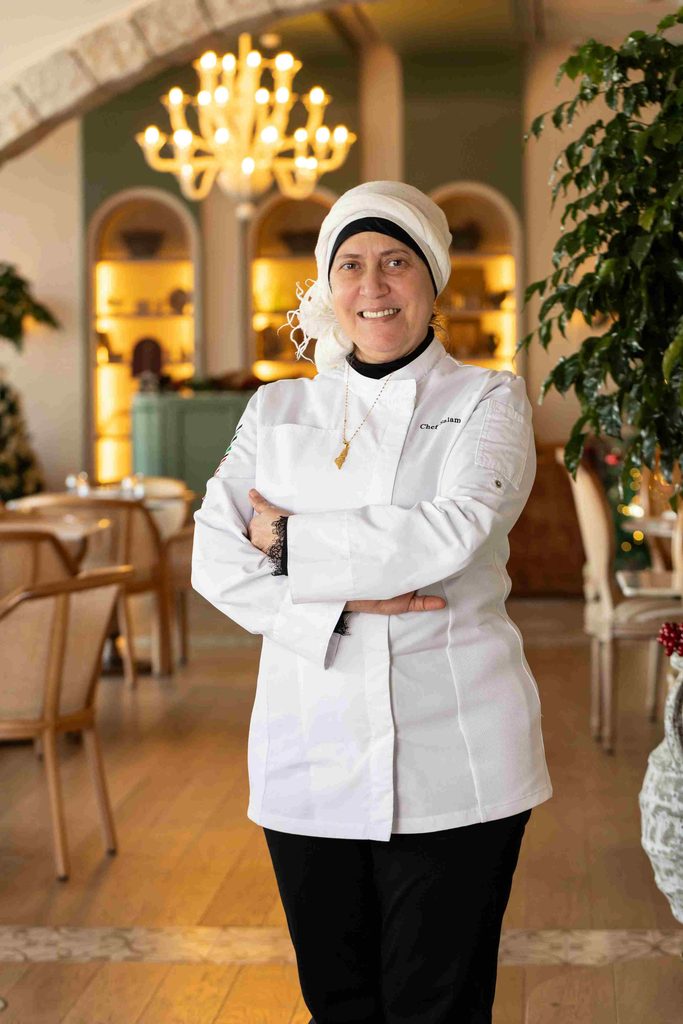
“My love for cooking started in my mother’s kitchen,” recalls Chef Salam, founder of two popular Levantine restaurants in Dubai. “I never imagined that one day I would have restaurants of my own.” Instead, food was simply a natural way to gather people around one table and make them feel welcome. Whether guests visit Bait Maryam or Sufret Maryam, her purpose remains keeping those family traditions alive.
Bait Maryam and Sufret Maryam are both recognized as MICHELIN Bib Gourmands in Dubai. Neither restaurant uses expensive ingredients, nor are they formally served. Instead, they are restaurants that prepare honest food from mothers and grandmothers around the world, and are as good as any other dining room in any part of the globe.
The Dubai-based chef has also recently released the English edition of her cookbook Bint Maryam (The Daughter of Maryam). The launch of the English version of the cookbook was celebrated with a brunch and book signing event at Sufret Maryam in Wasl 51. In the cookbook, Chef Salam Daqqaq shares her signature dishes and wants people to be able to cook the same dishes in their own kitchens.
“For me, the greatest compliment is knowing that someone is cooking one of my recipes for their family,” she adds. Recipes, according to the chef, should be shared and not kept as secrets. Generations of mothers have passed on Levantine culinary heritage to their children, and she hopes that families today will keep Bint Maryam on their kitchen counters and pass it down to future generations.
In the process of turning decades of personal memory into a cookbook, Chef Salam encountered many creative challenges. Most traditional Levantine cooks rely on nafas, a concept that describes a cook’s intuition and sensory instinct while in the kitchen.
The biggest challenge was to measure everything. All the recipes were tested in the kitchen using normal household pots and pans and the ingredients available in the average pantry. Even people who have never cooked Levantine food before will be able to follow the recipes with ease.
The main point, she said, was that food should never be made to take shortcuts or be made in a rush. Instead, each dish should be prepared with love and be made to feel like coming home to a loved one. The same message is conveyed to her restaurant staff.
Translation into English for Bint Maryam was also a great opportunity for the Chef to look at the Arabic expressions and techniques from another angle. “I realized that food is really a universal language,” she says. Bint Maryam is now introducing the rich traditions of Palestine and other Levantine countries to readers around the world who have grown up with very different food cultures.
The dish that best represents the chef’s philosophy of food is Fatet Musakhan. This dish is made with a few simple ingredients, including sumac, the tart spice that is used in many of the chef’s recipes, and slow-cooked onions, olive oil and chicken. It is a dish that reminds the chef of family gatherings around the table and of the beautiful flavors of Palestine.
What was her wish when she first opened Bait Maryam? “That the diners would feel as though they had come to my home.” Through Bint Maryam, now a part of her home can be in homes around the world. Knowing that people are eating her food as a family is more important to her than any award.
Chef Salam Daqqaq views her recipes as vessels that contain the memories of her mother, grandmother, and other family members.
“I hope that the future generations of my family will be proud of their roots and will continue to cook these dishes for their families. If Bint Maryam is able to help to preserve even a small part of our heritage then I will have achieved what I set out to do.”
-Chef Salam Daqqaq